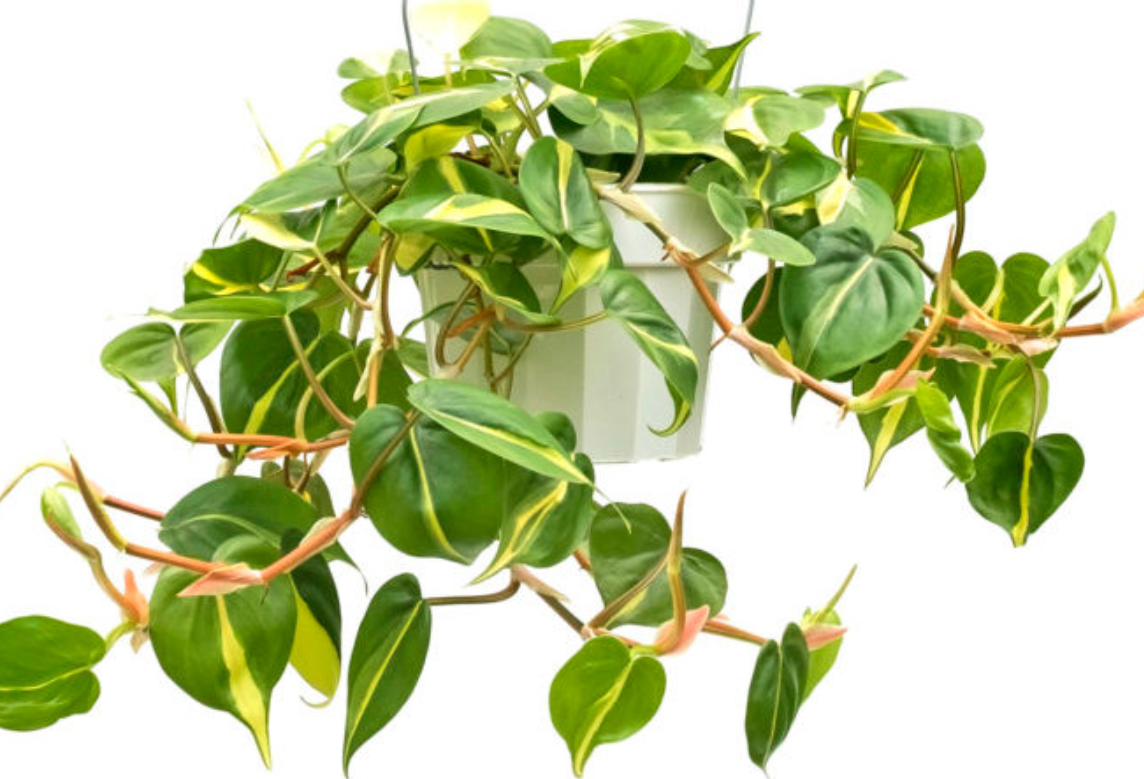
You’ve seen the Instagram posts with the hanging indoor plants suspended from the ceiling with their vines trailing down in their cute macramé hangers. It’s undeniable that creating a foliage-friendly home has become extremely popular over the last few years. Here are a few of our favorite low-maintenance hanging houseplants and how to care for them.
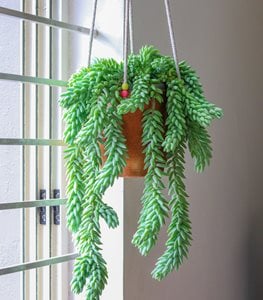
BURRO’S TAIL
Sedum morganianum
Burro’s Tail are a common type of flowering succulent used in arrangements or potted on their own. They feature long stems covered in juicy green leaves that almost resemble tear drops. Be careful though, these plants can get very heavy the larger they get. Their leaves are delicate and can fall off with the slightest touch, so be sure to hang it somewhere it won’t be bumped in to.
Humidity: Average (45-55% relative humidity)
Light: Bright to full sun (full sun requires acclimation to avoid sunburn)
Water: Allow the soil to dry between waterings to avoid root rot.
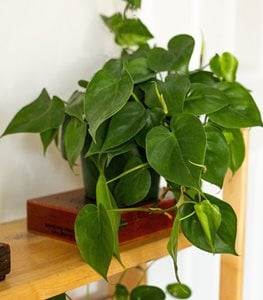
HEARTLEAF PHILODENDRON
Philodendron hederaceum
It’s easy to understand why so many people fall in love with these heart-shaped leaves. The plant has a few different variegation patterns, and many people hope to collect them all. Some of the most common ones are ‘Lemon Lime’, ‘Brasil’, ‘Silver Stripe’, ‘Cream Splash’, and ‘Micans’ (this one is velvety).
Humdity: Tolerant of lower humidity, but will thrive in higher levels.
Light: Low to bright indirect light
Water: Water when the top one inch of soil has dried out.
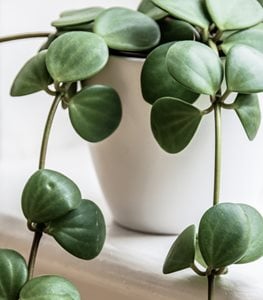
PEPEROMIA ‘HOPE’
Peperomia hybrid
Also known as “trailing jade”, ‘Hope’ is a rarely flowering plant that grows long vines featuring green coin-shaped leaves.
Humidity: Tolerant of lower levels of humidity, but appreciates at least 50% relative humidity.
Light: Low to medium indirect or artificial light
Water: Keep moist in spring and summer. Allow soil to dry between waterings in fall and winter.
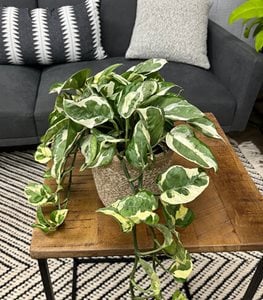
POTHOS
Epipremnum aureum
While this plant is also known as Devil’s Ivy, growing it is quite heavenly as it can thrive with minimal care—which is probably why you see them in so many businesses. Like the heartleaf philodendron, there are several different varieties of photos including golden, ‘Neon’, ‘Marble Queen’, ‘N’Joy’, ‘Manjula’, and more.
Humidity: Tolerant of lower humidity, but will thrive in higher levels.
Light: Low to high, including artificial
Water: Water when the top one inch of soil has dried out.
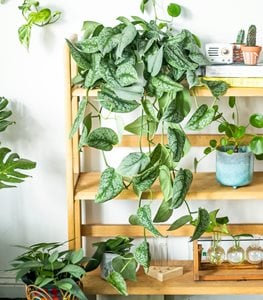
SATIN POTHOS
Scindapsus pictus
Deep green leaves with flecks of silver, is what makes satin pothos an easy favorite of many plant lovers. Like the heartleaf philodendron and pothos, Scindapsus comes in a few varieties including ‘Argyraeus’, ‘Exotica’, ‘Silver Splash’, ‘Silvery Anne’, and ‘Jade Satin’ (this one has no silver!). This trailing houseplant gives off a more sophisticated look but is extremely easy to care for.
Humidity: Tolerant of lower humidity, but will thrive in higher levels.
Light: Medium to bright indirect light
Water: Water when the top one inch of soil has dried out.
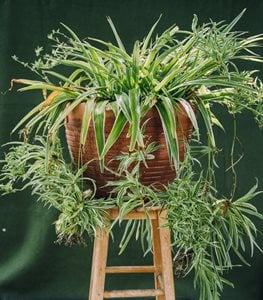
SPIDER PLANT
Chlorophytum comosum
With long, fun green and white leaves, spider plant is one of the most common hanging houseplants around. They are known to produce flowers in the spring, which will then turn into spider babies that can be removed and rooted into their own pots. Although these plants are hardy and known to handle lapses in care, they do prefer cooler temperatures over warmer ones.
Humidity: Can tolerate lower levels of humidity (40%), but prefers higher levels (60+%)
Light: Medium to (preferably) bright indirect light
Water: Allow soil to dry between watering.
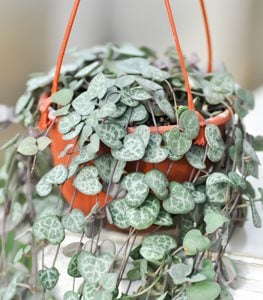
STRING OF HEARTS
Ceropegia woodii
String of hearts plants are adored by many as they can grow extremely long vines that are covered in heart-shaped leaves that are green with silver and a pink-to-purple underside. There is also a variegated version that is primarily white with green and pink accents, which can vary by the amount of light exposure.
Humidity: Average (40 to 50% relative humidity)
Light: Meduim to bright indirect light
Water: Allow soil to dry between watering.
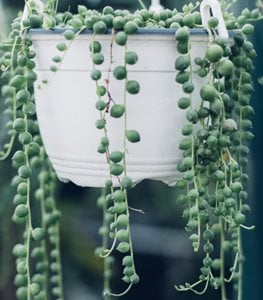
STRING OF PEARLS
Senecio rowleyanus
String of pearls is a unique trailing succulent that resembles a pearl necklace if it were made of peas. These could be called string of peas, but please don’t eat them! A variegated version of this plant can be found featuring white striping or sections with hints of purple or pink depending on sun exposure.
Humidity: Average (40 to 50% relative humidity)
Light: Preferably bright indirect light
Water: Allow soil to dry between watering.
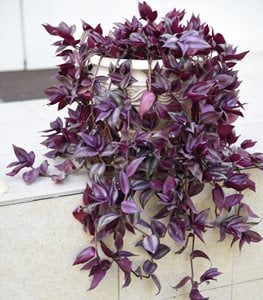
WANDERING DUDE
Tradescantia zebrina
Regarded as one of the easiest plants to care for, the purple wandering dude features dark purple leaves with silver coloring that almost looks painted on. These dudes are generous growers, hence the wandering title.
Humidity: Average relative humidity, but would be best around 60%.
Light: Medium to bright indirect light. Lower light conditions cause striping to fade.
Water: Allow soil to dry between watering.
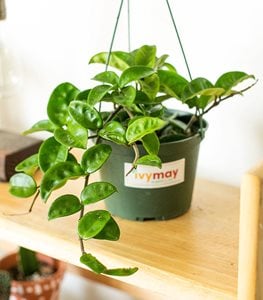
WAX PLANT
Hoya carnosa
Wax plants earn their name from their thick wax-like leafy exterior and are often thought to be succulents, but they are not. While not all cultivars feature fun coloring, Hoya are known for their blooms. With the proper care, you can expect fragrant pink & red star-shaped blooms (they also secrete sticky nectar!).
Humidity: Will tolerate 30 to 40%, but prefers 50 to 60% relative humidity.
Light: Bright indirect light
Water: Allow soil to dry between watering.
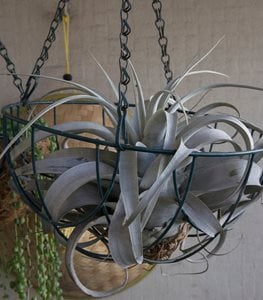
BONUS: AIR PLANT
Tillandsia spp.
Air plants cannot survive on air alone, but they don’t require being potted in soil! And, while most air plants don’t offer long-hanging vines, tillandsias still make great hanging plants. A personal favorite is the Tillandsia xerographica with its ornate silver leaves that curl into itself creating a cute donut-like shape. If you’d like a trailing-style air plant, check out Spanish moss.
Humidity: Can tolerate medium humidity levels, but prefers 60-65% relative humidity to avoid drying out.
Light: Bright indirect or filtered light
Water: Thoroughly soak in water every two weeks or spray 2 to 3 times per week.
Hi, this is a comment.
To get started with moderating, editing, and deleting comments, please visit the Comments screen in the dashboard.
Commenter avatars come from Gravatar.